
Harry Pinedo - Utopia in Our World (Utopia en nuestro mundo)
Listening to the Voices of the Rivers
NCA - Gallery One & Two
30th October - 22nd November 2025
open: Thursday - Saturday, 12 - 5pm
Preview: 29th October, 6 - 8 pm
School and institutional visits (booking required): Monday - Wednesday, 10 am - 2 pm. Please contact info@visitnca.com to book a place.
See below for information about the public programme
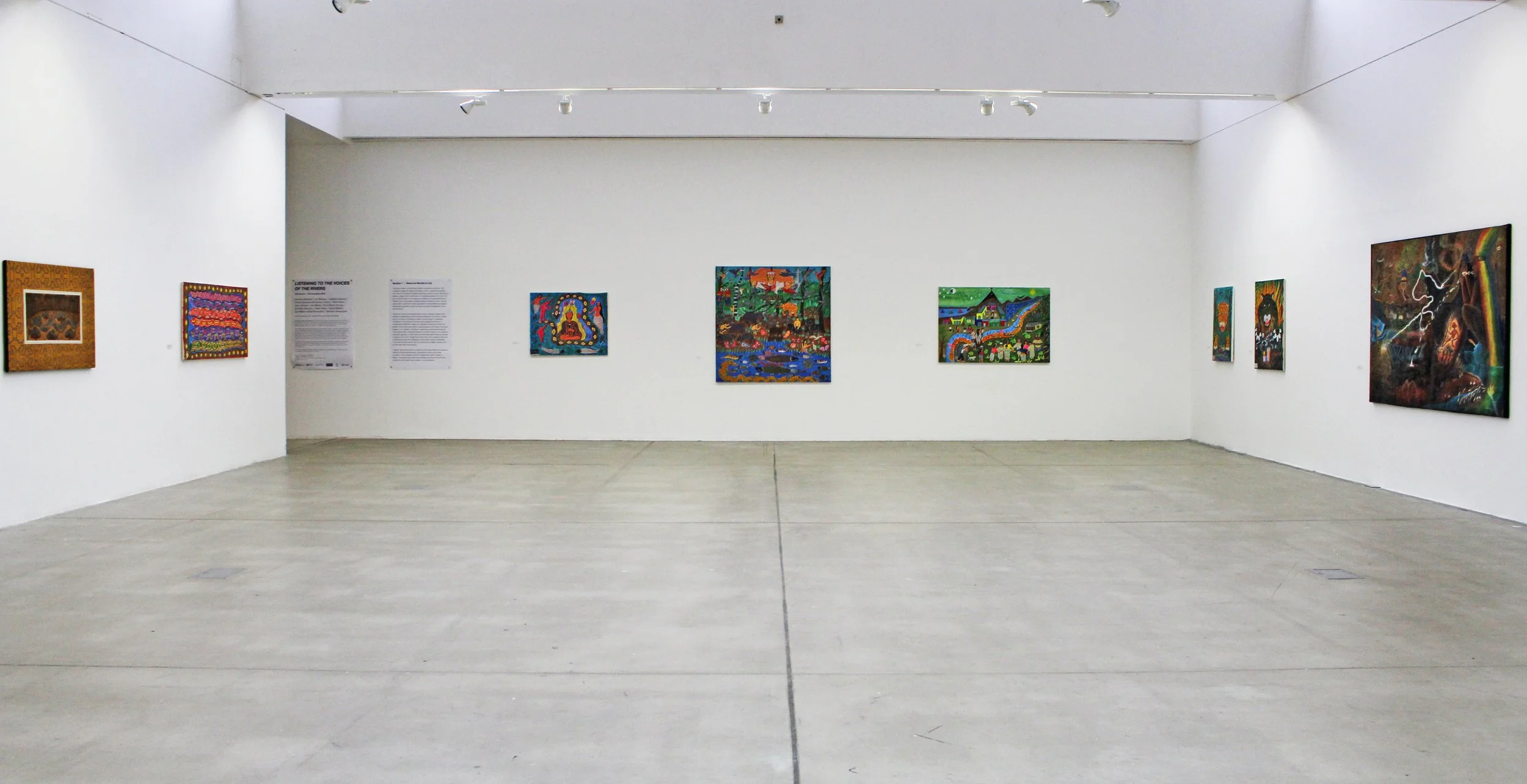
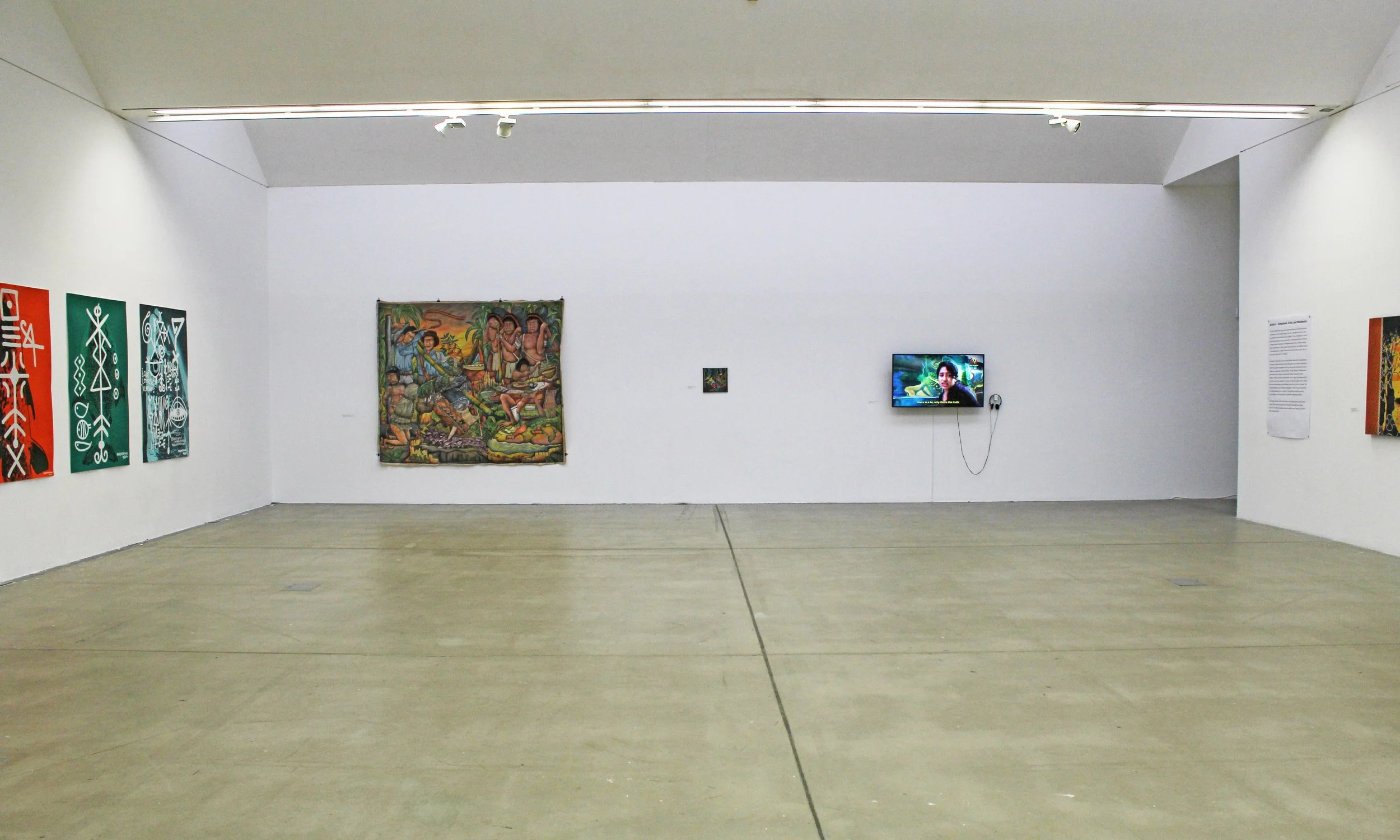
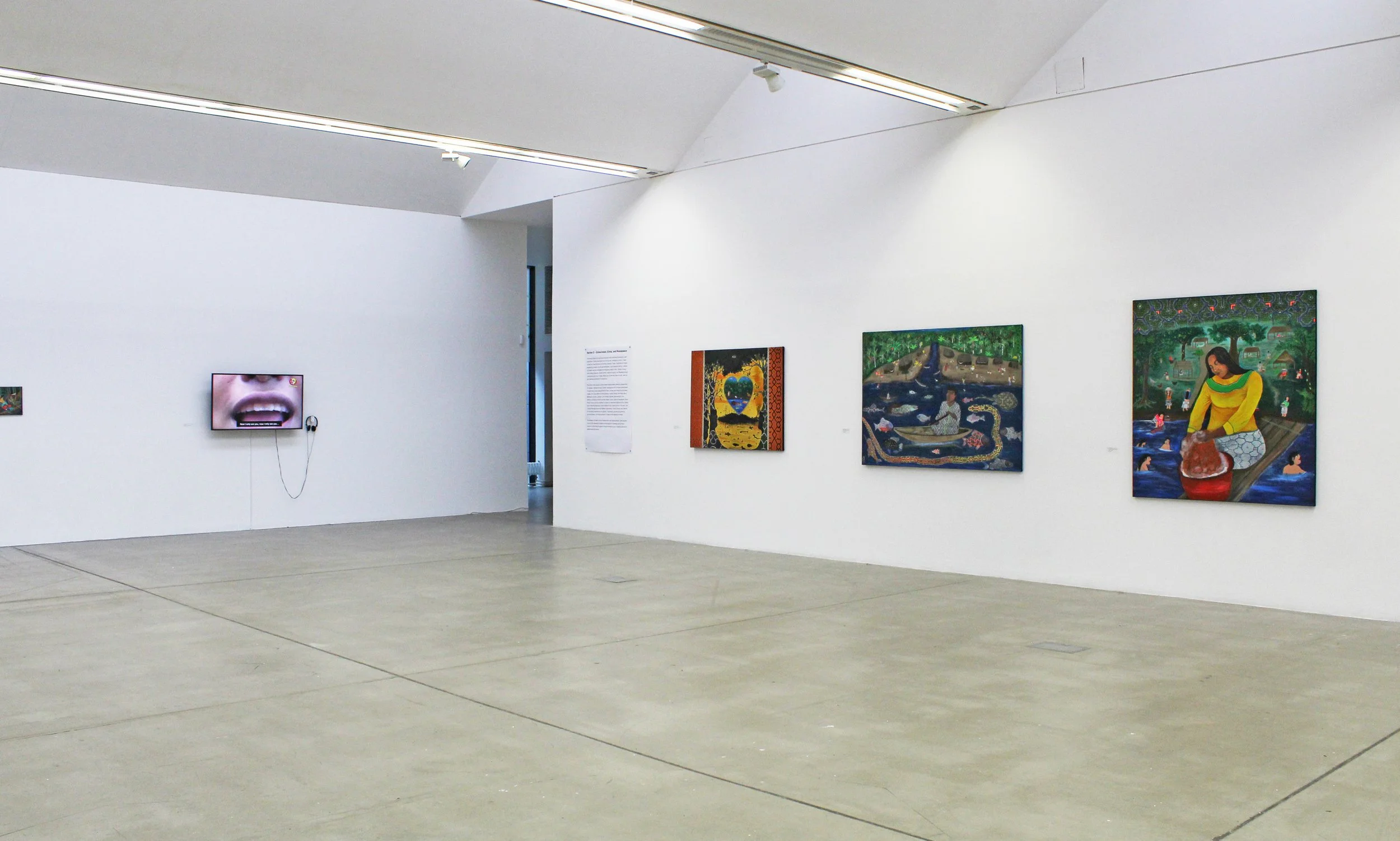
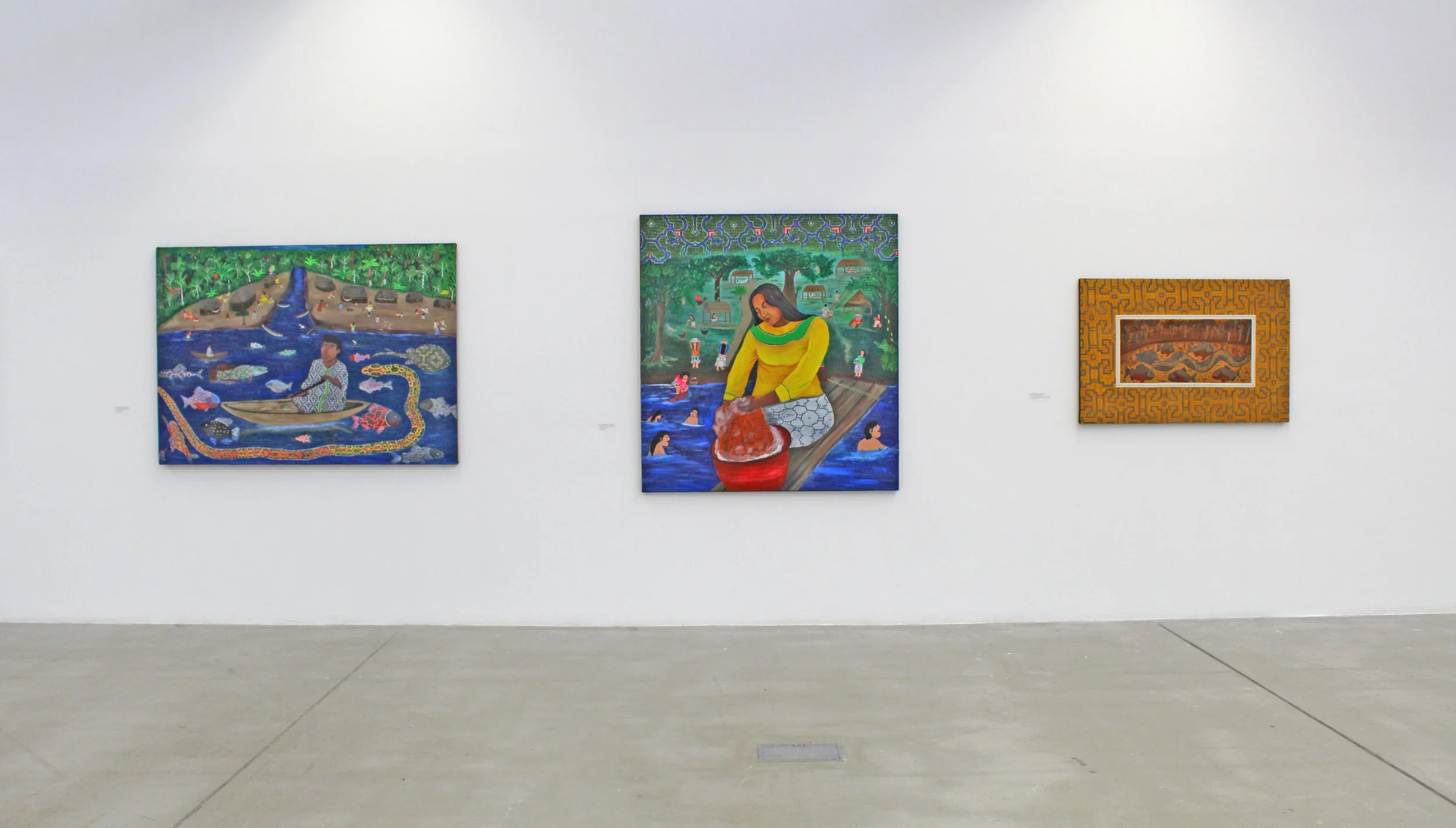
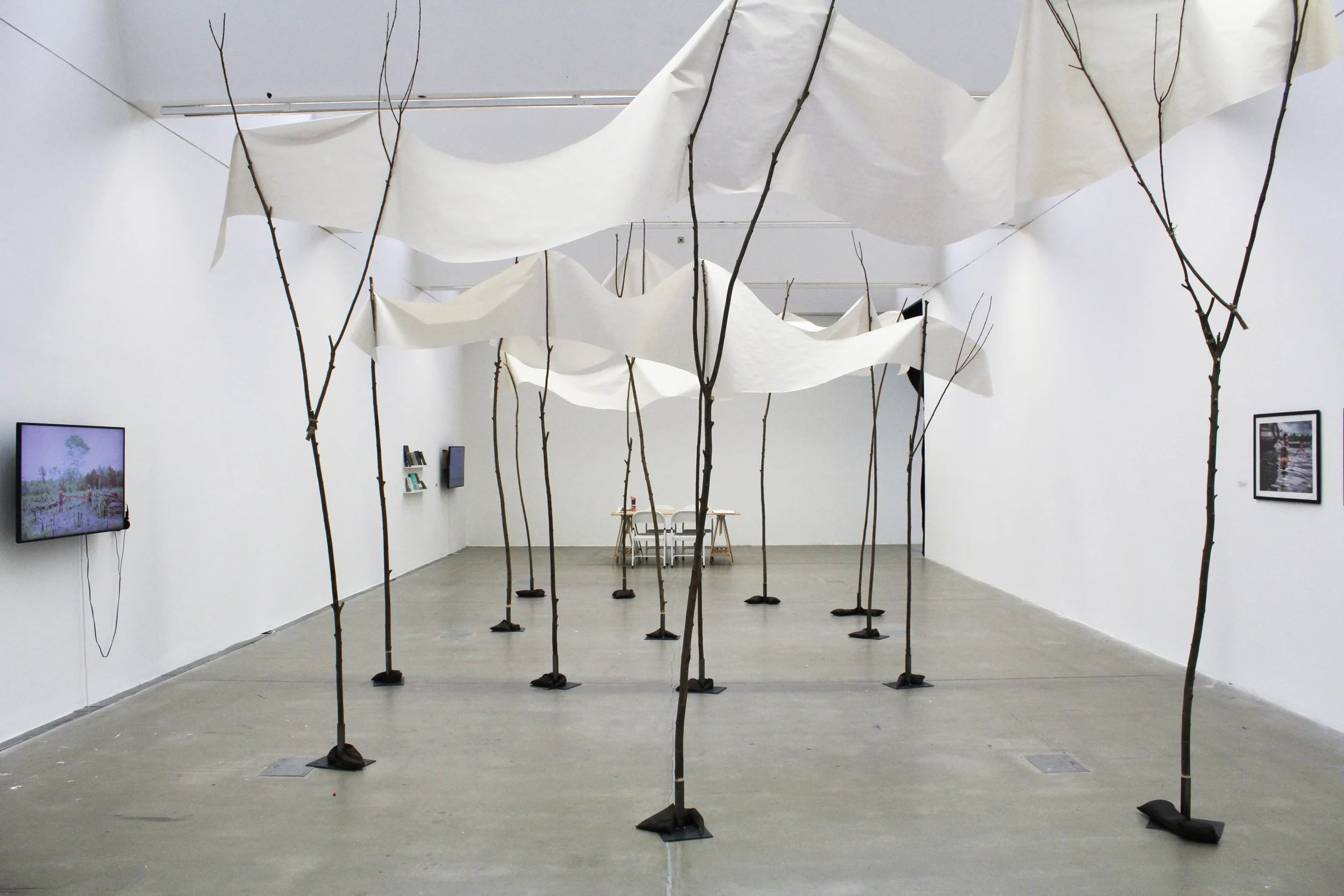
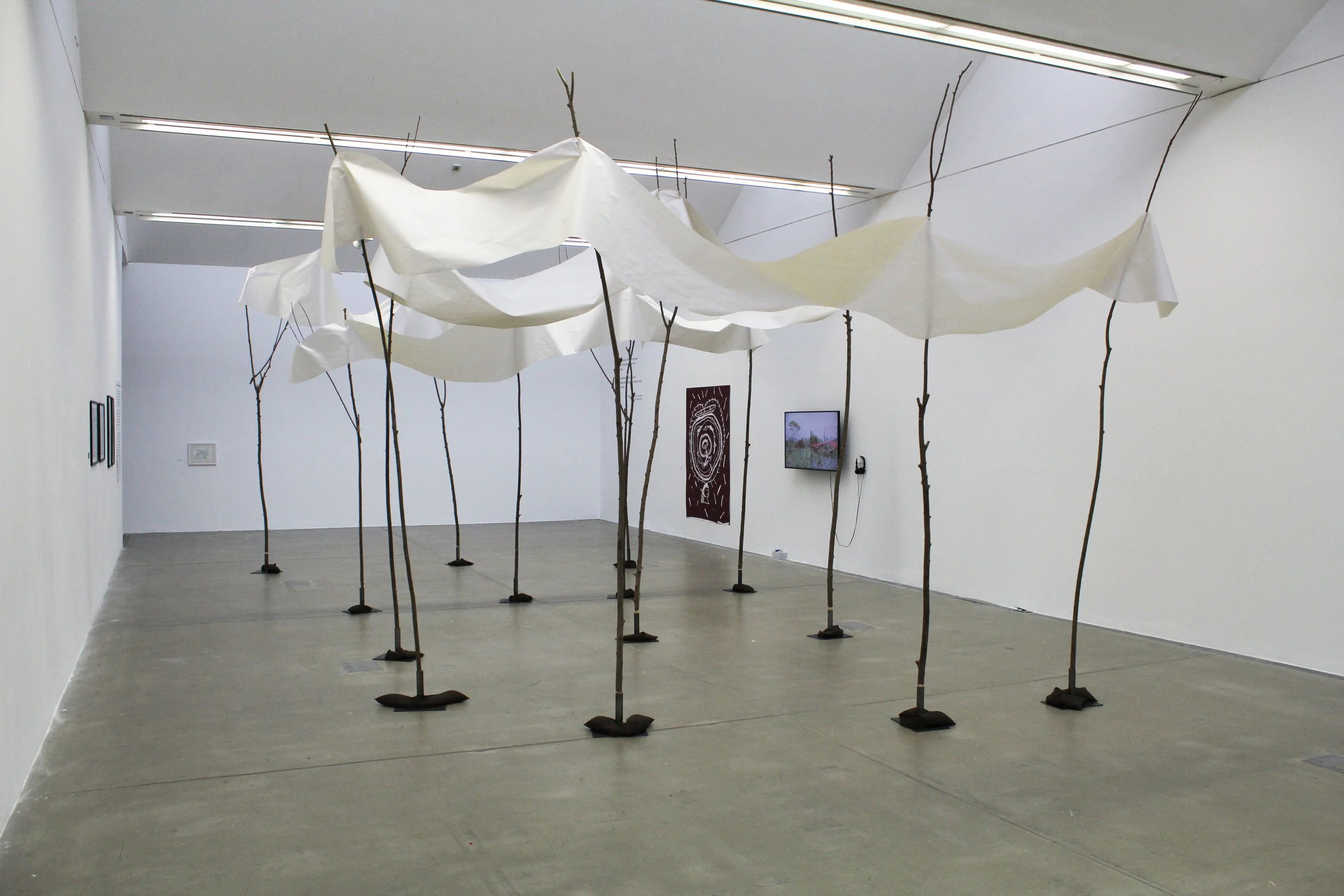
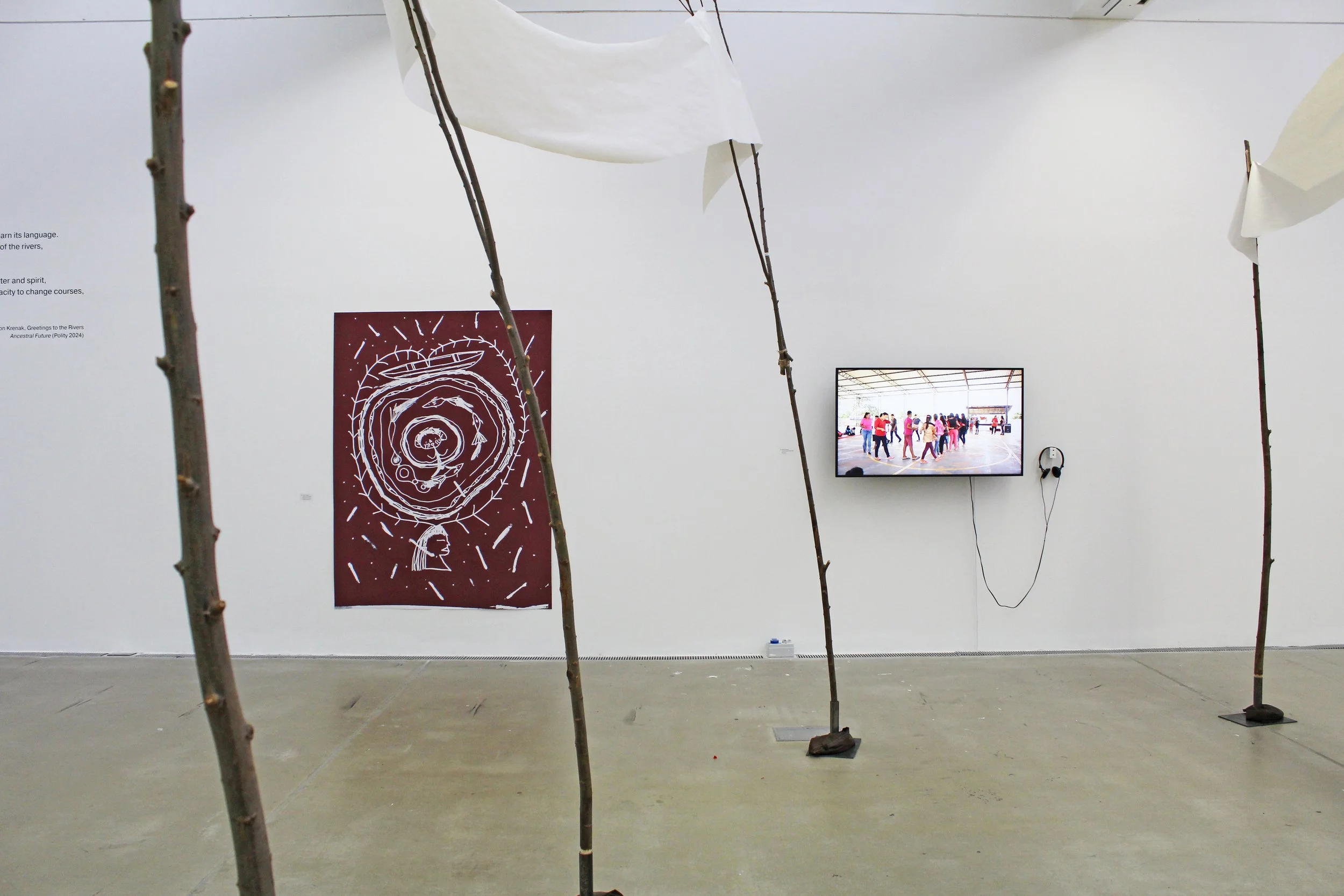
Listening to the Voices of the Rivers is an exhibition and community art program that explores the vital role rivers play in sustaining communities and ecosystems. Drawing on Amazonian Indigenous philosophies and practices, the exhibition connects to initiatives in the North East of England on healthy rivers and rainforest curricula, addressing ecological sustainability, Indigenous knowledge, and community participation.
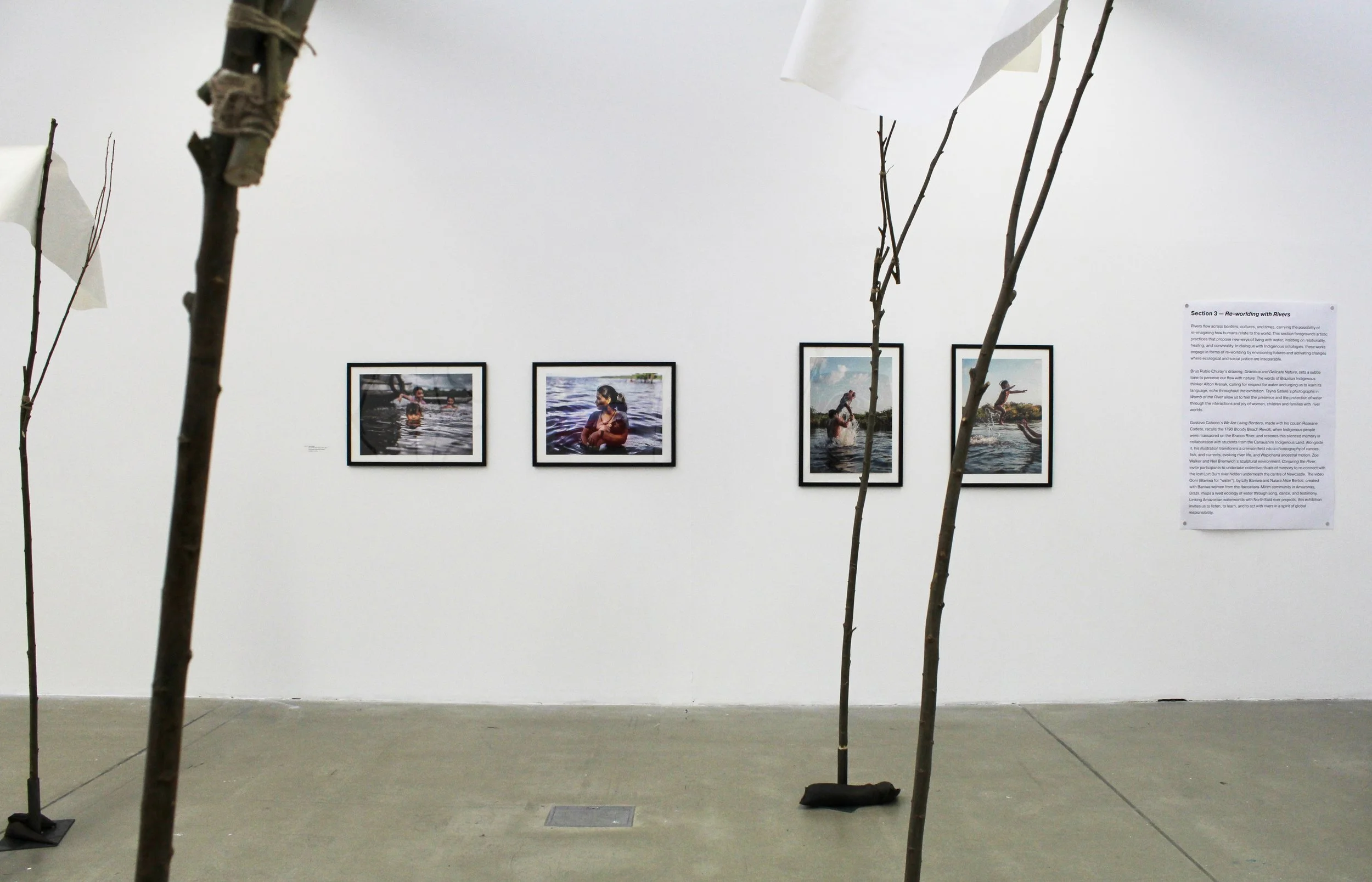
Curated by Dr Giuliana Borea, Dr Jamille Pinheiro Dias and Dr Harriet Sutcliffe, the exhibition brings together the powerful work of artists from Peru and Brazil — Rember Yahuarcani (Uitoto), Harry Pinedo / Inin Metsa, Cordelia Sánchez / Pesin Kate (Shipibo), Brus Rubio Churay (Murui and Bora), Danna Gaviota with Kimber Fercat + Pedro Alca (Kukama), Denilson Baniwa, Lilly Baniwa (Baniwa), Gustavo Caboco (Wapichana), Tayná Sateré (Sateré-Mawe) — whose paintings, videos, drawings, and photographs show the entanglements between humans, animals, plants, rivers, and ancestral beings, confront extractivism, and foreground water as a source of life, continuity, and care. Alongside them, UK-based artist duo Zoe Walker & Neil Bromwich will work with school groups on a participatory project that explores the ghost rivers hidden beneath the streets of Newcastle.
The exhibition fosters a deeper understanding of the global climate crisis and will coincide with COP30 in the Brazilian Amazon as it advocates for collective responsibility by encouraging people of all ages to reflect on their role in shaping a sustainable future. The Amazon, the Ouseburn, and the Tyne are presented as starting points for action and understanding. Emphasis is placed on contributing to school curricula on rainforests, highlighting Indigenous ecological knowledge and challenging stereotypes.
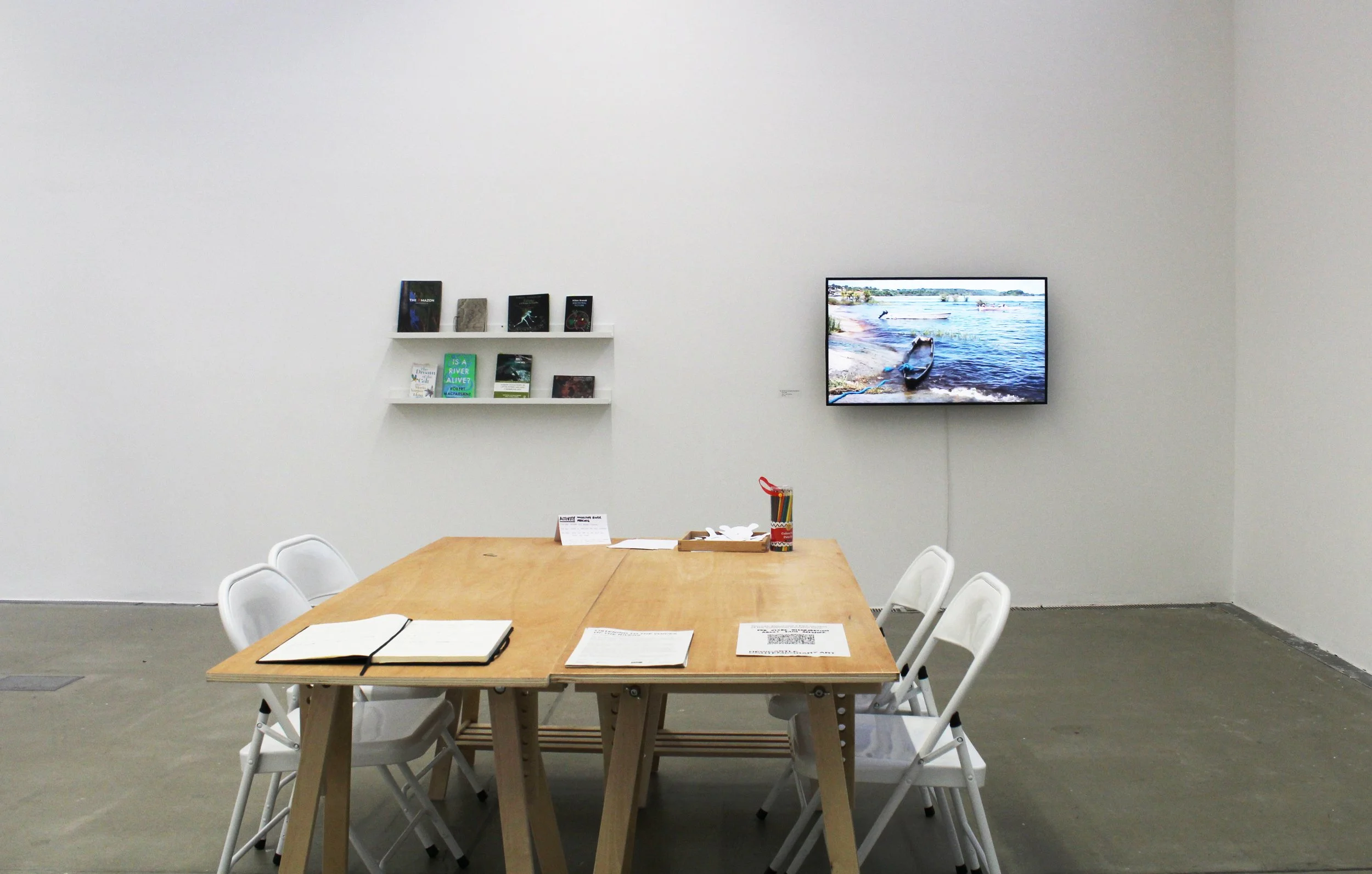
With the Newcastle University Centre for Water and our partners, we have designed a rich programme that integrates art, science, and community knowledge. It includes artists’ and curators’ talks, weekly gallery visits, film screenings, and a one-day symposium where people can learn more about North East initiatives for the rivers. Schools are invited to book a visit for a tailored programme that connects with the rainforest curricula. This exhibition invites residents, schoolchildren, artists, educators, environmental practitioners, and underrepresented communities, offering a timely opportunity to reflect, learn, and act.
The project is a collaboration between Newcastle Contemporary Art, Newcastle University, University of London’s School of Advanced Study, and the Amazonart Project. It has received support from Community Foundation North East, Embassy of Peru in the United Kingdom, Newcastle University - NUCORE Water, HaSS Global, School of Modern Languages - and University of London’s School of Advanced Study. It includes partnerships with Newcastle University Centre for Water and Centre for Latin America and the Caribbean, University of London, SAS’s Environmental Humanities Research Hub, Tyne Rivers Trust and UK Environment Agency.
Exhibiting Artists
Denilson Baniwa
Lilly Baniwa
Gustavo Caboco
Danna Gaviota with Kimber Fercat + Pedro Alca
Harry Pinedo / Inin Metsa
Brus Rubio Churay
Cordelia Sánchez / Pesin Kate
Tayná Sateré
Zoe Walker & Neil Bromwich
Rember Yahuarcani
Curated by Dr Giuliana Borea, Dr Jamille Pinheiro Dias and Dr Harriet Sutcliffe.

Public Programme
Wednesday 29th October, 6 - 8pm - Preview: Listening to the Voices of the Rivers
Thursday 30th October, 4pm - Artist talk - Harry Pinedo
Friday 31st October, 1pm - Spotlight exhibition tour
Saturday 1st November, 12 - 2pm - Family friendly craft activity
Thursday 6th November, 4pm - Film Screening - Amazonia EcoQueer / Border Ecologies
Friday 7th November, 1pm - Spotlight exhibition tour
Wednesday 12th November, time TBC - Symposium
Thursday 13th November, 4pm - Artist talk - Rember Yahuarcani
Friday 14th November, 1pm - Spotlight exhibition tour
Thursday 20th November, 4pm - Artist Talk - Lilly Baniwa and Denilson Baniwa
Friday 21st November, 1pm - Spotlight exhibition tour
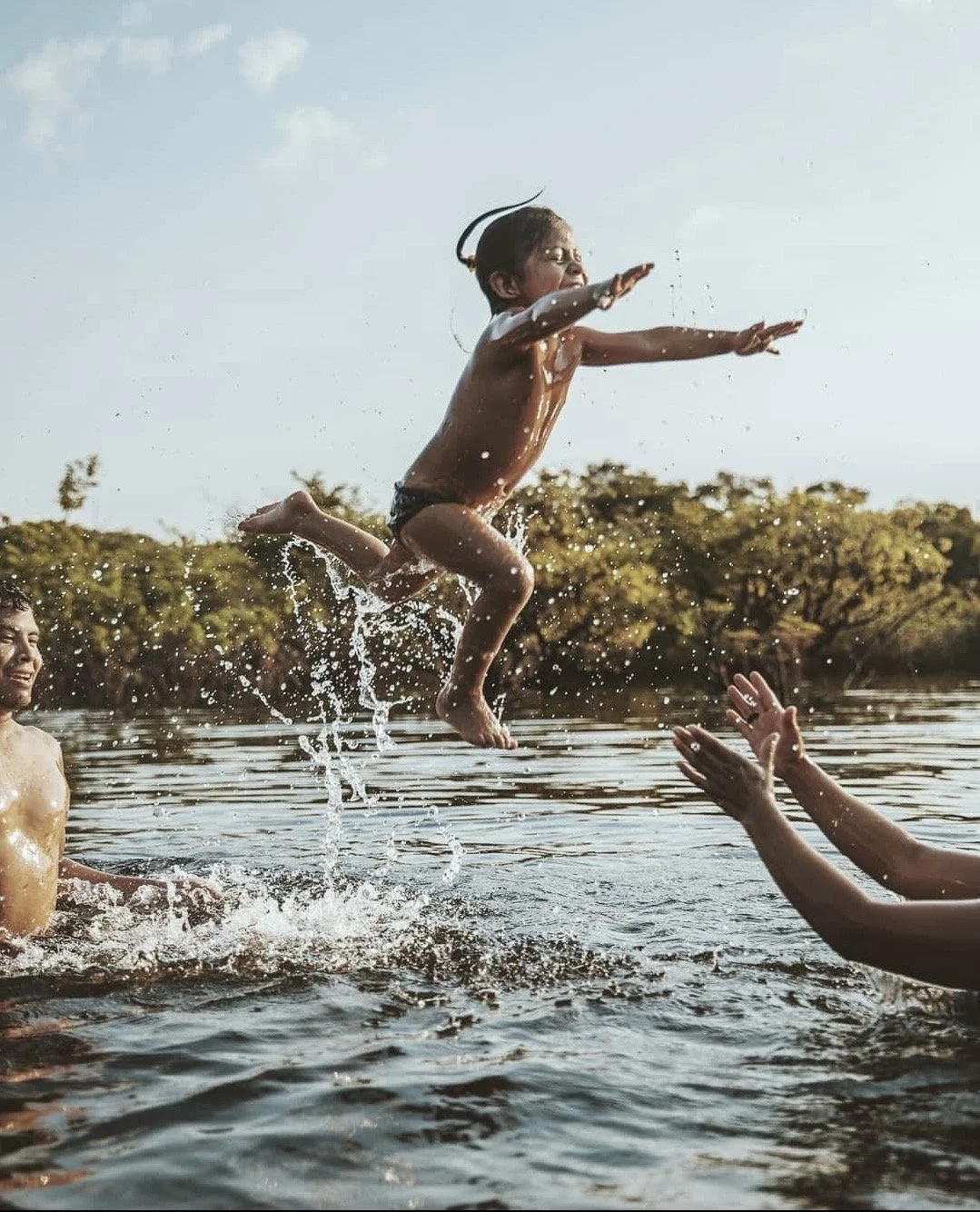
Image: Tayna Sateré
School Visits
We are delighted to invite school groups to visit the gallery. One of the curators, Giuliana Borea, or our educational facilitator, Mariana Tapia, will give a gallery visit and deliver an activity about the exhibition. This will provide background on the artists, the Amazon River, and perspectives of indigenous people living in the region. The session includes a gallery tour and a hands-on practical activity.
The session can last between 60 and 90 minutes and will be tailored to the age and needs of students. Students will have the possibility to see their work displayed during the week of the school visit or take their activity with them.
Slots are available on Monday - Wednesday: 10 - 11.30 am and / or 12 - 1.30 pm (except Wednesday 12th November)
Please contact us to book a slot.
Artists biographies
Denilson Baniwa is an artist born in Dari village, Barcelos, in the state of Amazonas, Brazil. Blending ancestral and contemporary elements in his art to highlight Indigenous struggles and challenge colonial narratives, Baniwa works across various media, manipulating images to uncover marginalised Indigenous histories. His work, exhibited internationally, critiques colonialism while reflecting contemporary Indigenous experiences. Notable exhibitions include the Getty Foundation, the 22nd Biennale of Sydney, the Princeton University Art Museum and Centro Cultural São Paulo.He is currently preparing exhibitions for the Musée du Quai Branly in Paris and the Humboldt Forum in Berlin. He was also one of the curators of the Hãhãwpuá Pavilion, which represented Brazil at the 60th Venice Biennale.
Lilly Baniwa is an Indigenous actress, performer, artist, and researcher from the Upper Rio Negro in the Brazilian Amazon. Her recent performances include Being-Us-Human, We Are Rivers, Confluences, and Before Time Existed. Her audiovisual projects include the short film Ooni and video-performance-manifesto Lithipokoroda.
Gustavo Caboco is an artist of the Wapichana people in Brazil. Born in Curitiba, southern Brazil, he is the son of Lucilene, a Wapichana woman who was forcibly separated from her community in the Brazilian Amazon. His practice explores the complex processes of return, displacement, and memory through what he calls a "return to the land". Caboco multidisciplinary work addresses the fragmented experiences of Indigenous life in urban settings. He participated in the 34th Bienal de São Paulo with a powerful series on memory, territory, and language, and was nominated for the 2022 PIPA Prize. In 2024, Caboco was one of the curators of Brazil’s renamed Indigenous pavilion at the 60th Venice Biennale.
Danna Gaviota is an activist, composer, and singer from the Kukama people in Nauta, Marañón River in Peru. She graduated in Anthropology from the National University of the Peruvian Amazon (UNAP). Her interest focuses on decolonization and the reclamation of knowledge through community processes and generational encounters. She has worked through music and other spaces, strengthening Kukama youth and children with the support of wise men from the last Kukama-speaking generation. She collaborates with community institutions such as Radio Ucamara, supporting the defense of Kukama identity, territory, and life. Some of her songs include Kumbarikira (Radio Ucamara, Create your voice), and her recent EP: KUKAMA IYA, released in 2024 on various platforms such as YouTube and Spotify.
Kimber Fercat is a rapper from the Kukama people, born in Nauta. He collaborated with Radio Ucamara on the songs Yuwara and Maisangara. His musical style blends hip hop and trap, bringing Kukama voices into contemporary urban music.
Pedro Alca is an activist and singer from the Kukama people. He has participated in videos produced by Radio Ucamara, including Yuwara, Maisangara, and Babel, contributing to the revitalization of the Kukama language through music, social media, and radio.
Harry Pinedo/ Inin Metsa is an artist and intercultural teacher. He belongs to the Shibipo people in Peru’s central Amazon and lives in the Shipibo community of Cantagallo in Lima. His work focuses on issues of the interrelation of worlds and environmental sustainability, internal migration and the various battles to establish an indigenous community in Lima. His first solo exhibition “The Splendor of Yanapuma” (2017) denounced pollution in the Amazon, and during the Covid-19 pandemic, his art practice focused on Shipibo responses to Covid-19. He has exhibited internationally and has recently participated at Pinta Miami art fair in the Special Project “To Paint the Forest Beings”.
Brus Rubio Churay is an artist who belongs to the Bora and Murui peoples of Peru’s northern Amazon. His work focuses on knowledge production and ritual practices, the rubber boom and the politics of memory, and transnational mobility. His art is included in the collection of the Museo de Arte de Lima and has been exhibited across the Americas, the United States, Europe, and Asia. His artistic residencies include Mana Residencies (Miami, 2018) and Matadero Madrid (2019). He is currently presenting at the 2ª Bienal das Amazônias in Belém and in his solo show “Hijo del clan Siuekuduma, Estrella del amanecer” at the Centro Cultural Inca Garcilaso in Lima.
Cordelia Sánchez/ Pesin Kate is an artist. She belongs to the Shipibo-Konibo people and is from the native community of San Francisco in Pucallpa, Peru. Her artistic production is rooted in the Shipibo tradition and the knowledge transmitted orally by the mothers and grandmothers of the community. Her work highlights the identity power of the Kené and its relation to healing processes and aesthetics. It also situates the role of women as a main actor in achieving balance. In 2024 she had her solo show “CORDELIA: Surrounded by nature” and participated at Pinta Miami art fair. Her work her work was included in Amazons: The Ancestral Future at Centre de Cultura Contemporània de Barcelona – CCCB, Barcelona, and is currently presented at the Museo de América de Madrid.
Tayná Satare is a documentary photographer and visual artist from the Brazilian Amazon. An Indigenous member of the Sateré-Mawé people of the Lower Amazon, Tayná began her career in 2014, when she moved to Manaus and worked as a volunteer photographer at the Coordination of Indigenous Peoples of Manaus and Surrounding Areas (COPIME). In 2020, supported by the National Geographic Society, she took part in the project Solo Mothers – Living the Pandemic in Brazil. In 2024, she exhibited her work in France at the cultural space Friche la Belle de Mai in Marseille, and in the exhibition ‘Visions from the Amazon’ hosted by Birbeck’s Peltz Gallery in London in 2025.
Zoe Walker and Neil Bromwich are a Glasgow based collaborative duo, known for their large-scale iconic sculptural works, participatory events and exhibitions that invite audiences to imagine better worlds. At the core of their practice is the exploration of the role art can play as an active agent in society, evolving environments and situations within which people can begin to re-examine the world around them through protest, celebration and contemplation. Walker & Bromwich have been awarded with expansive public commissions and have also presented their work at documenta-fifteen Germany, SEA + Triennale Jakarta, Thessaloniki Biennale, Greece, MCA Sydney; Tate Britain; V&A London; Baltic Centre for Contemporary Art UK, Glasgow International; Edinburgh Art Festival, among others.
Rember Yahuarcani is an artist, curator, activist and writer who belongs to the Aimenɨ -White Heron- clan of the Uitoto Nation of northern Amazonia in Peru. His artistic practice focuses on exploring the complexities of the Uitoto’s ontologies and the Amazonian worlds urging respect for indigenous life projects and worlds. His work has a wide international circulation. In 2024, Yahuarcani participated in Foreigners Everywhere at the 60th Venice Biennale. His most recent solo shows include, “JUMA. Preservar la memoria. Imaginar el futuro” at the Museo de Arte Contemporáneo de La Boca–MARCO (2025), and “Here Lives the Origin” at Josh Lilley Gallery in London - gallery that represents him. His curatorial activity includes the exhibition Ite!/ Neno!/ Here! (with G. Borea, 2020), La Canoa: Melodías desde el Río (2023), and Somos Raíces (with I. Lenzi, 2025).
Curators Biographies
Dr Giuliana Borea is the director of the Amazonart Project, Senior Lecturer in Latin American Studies at Newcastle University, and an Affiliated Lecturer in Anthropology at the Pontificia Universidad Católica del Perú. Her research concerns the political economy of contemporary art worlds and their transnational networks; museum theories, politics and practices; place-making and sensory knowledge. Borea has built her career at the intersection of research, teaching, curatorship and cultural policy. She has been Peru’s Director of Museums and Cultural Heritage and Coordinator of the Lima Contemporary Art Museum. Her curatorial work includes The Amazonian Rubber Boom (2023 with E. von der Walde) and Ite, Neno, Here: Responses to Covid-19 (2020 with R. Yahuarcani). She is the author of Configuring the New Lima Art Scene (Routledge, 2021).
Dr Jamille Pinheiro Dias is the director of the CLACS and co-director of the Centre for Environmental Humanities Research at the University of London’ School of Advanced Study, where she also works as a lecturer. She holds a PhD in Modern Languages from the University of São Paulo and was a visiting researcher at Stanford University. Her research focuses on environmental issues, Indigenous arts, Amazonian cultural production, and translation in Latin America, focusing on Brazil. Her work has been published in journals, including Environmental Humanities, and the Journal of Latin American Cultural Studies of Manchester. She has also been a translator of authors including Ailton Krenak, bell hooks, Antônio Bispo dos Santos, and Judith Butler.
Dr Harriet Sutcliffe is Director of Newcastle Contemporary Art and an artist, curator, and researcher. She is also an Associate Lecturer at Newcastle University. Her recent curatorial projects include Delaine Le Bas: + Fabricating My Own Myth – Red Threads and Silver Needles and Harry Lawson: Stepney Western (2025, Newcastle Contemporary Art), Mirror Nerons (Hatton Gallery, 2024), Matt Rugg: Connecting Form (Hatton Gallery, 2023), Undutiful Spirit (BALTIC Artists’ Archive Residency, 2022). She co-authored Matt Rugg: The Many Languages of Sculpture (2023) and contributed catalogue essays for Mali Morris: Returning and James Hugonin and Nick Kennedy: Always and Never the Same (2024) Her practice, rooted in place, engages with collections, sites, and archives through installation, sculpture, writing, and workshops—often uncovering overlooked histories and narratives.